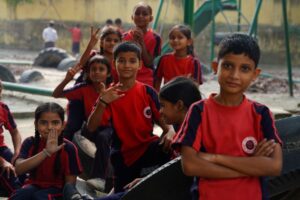


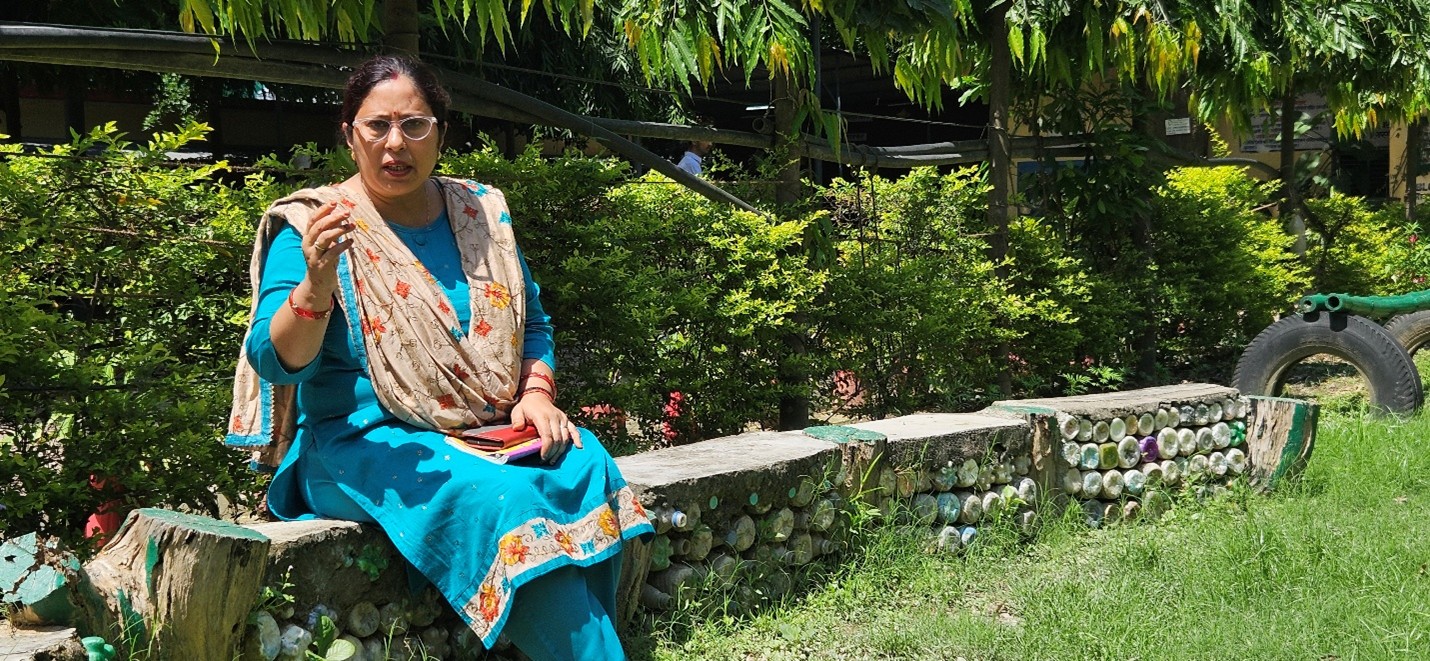
Stepping onto the campus at Yash Vidya Mandir feels like entering a different energy. The signs are everywhere – a turbine ventilator spins atop a yellow bus-turned-lab. In the play area, children climb onto a see saw-like swing made from massive rubber tires. Nearby, benches built from green, densely-packed plastic bottles, glisten in the sun.
Sustainability is not only taught but also practiced and experienced at this school in rural Uttar Pradesh. One of the teachers responsible for this ethos is Vandana, who has spent over 15 years transforming how rural children and teens see their world. But her connection to nature isn’t just professional – it’s deeply personal.
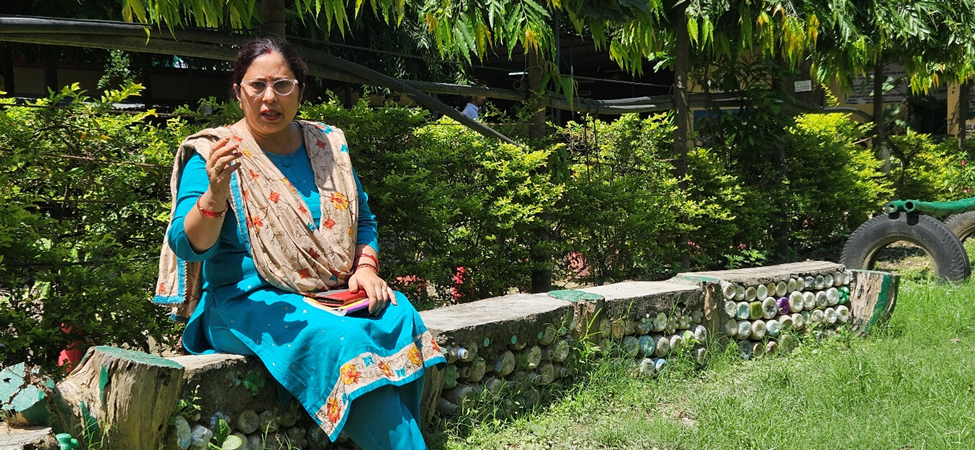
“जब मैं प्रकृति के साथ होती हूँ, मुझे थकान महसूस नहीं होती। धरती से एक अलग-सी ऊर्जा मिलती है – शायद वही मेरी माँ है कहीं न कहीं,” shares Vandana.
Turning waste to wonder
Vandana’s journey into teaching began unexpectedly in 2008 during a difficult period in her life. “जीवन में कभी-कभी एक टर्निंग पॉइंट आता है। मेरे साथ भी ऐसा हुआ,”she says. Amidst health challenges, her husband encouraged her to pursue the NTT (Nursery Teacher Training) course from JBNSS, Ayodhya, as a way to find a new direction.
During her training, she came to be known for the “कबाड़ से जुगाड़” or “waste to wonder” approach – creating quality, age-appropriate, learning and teaching materials (LTMs) from waste. Despite having no prior teaching experience and coming from a traditional state board education background, something clicked.
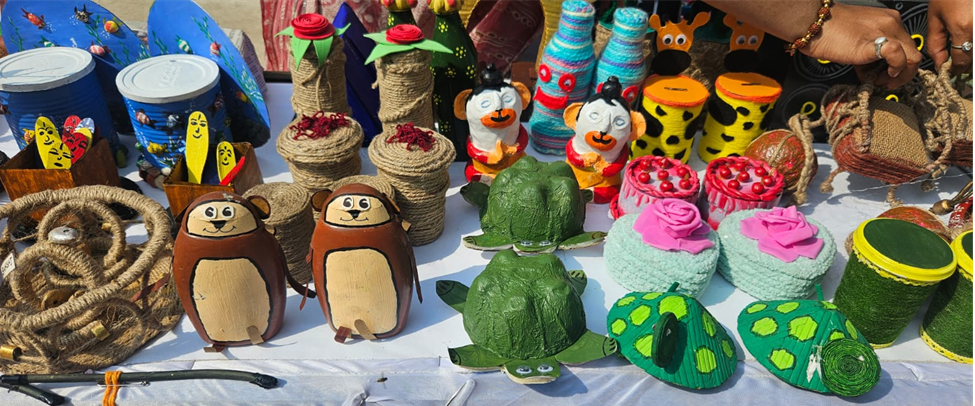
Her inspiration came from an unexpected source: memories of her grandmother and mother. “मेरी दादी थीं, अम्मा थीं। वह घर में बहुत सारी चीज़ें बनाती थीं, घरेलू सामान से,” she recalls. They would create household items from everyday materials, avoid buying things from outside, and teach their children to make things at home. A young Vandana would sit and watch them spin and weave.
At Yash Vidya Mandir, she found a platform to bring those childhood memories to life.
Building a green curriculum
What started as environmental activities evolved into a comprehensive program integrated across all grade levels. As the coordinator of the school’s Roots & Shoots chapter – the global youth program founded by Dr. Jane Goodall – Vandana developed a structured, age-appropriate and experiential curriculum running from April through December.
The progression is thoughtful: nursery students take nature walks – touching tree barks and feeling leaves under their feet. Primary students collect natural materials to create collages and bird houses. By third grade, children are understanding composting and soil health.
“बच्चे खाद बनाना अलग-अलग तरीकों से सीखते हैं – जैसे जैविक खाद और हमारे मानव-निर्मित खाद में क्या अंतर है।”
Fourth graders work to protect topsoil layers. Fifth graders conduct research on medicinal plants and create detailed inventories. “चरण से चरण वे पार करते हुए जाते हैं,” Vandana explains. It is how students stay connected to nature while touching every subject from Science and Social Studies to Math and Hindi.
Also integrated throughout the curriculum is the “कबाड़ से जुगाड़” approach. For instance, students repurpose cold drink bottles, saree packaging, and sweet boxes, into duster stands used in each classroom, “दाना-पानी” bottle feeders for birds on campus, and handmade paper files.
Students operate through interconnected groups: an eco-club that reports monthly activities, a clogging group that collects wrappers to make eco-bricks. Vandana explains, “इस तरह चेन से चेन जुड़ी हुई है, जिससे किसी एक पर बोझ भी नहीं आता और काम भी हो जाते हैं।”
Learning with students
Vandana believes teachers learn as much from students as students learn from them. The school saw this firsthand while creating Yash Sarovar, a small pond on campus.
Senior students working on their annual mud project noticed something missing. “बच्चों की तरफ़ से यह बात आई कि, मैम, सबके दोस्त होते हैं, लेकिन हमारा सरोवर बिल्कुल अकेला है,” Vandana recalls. “क्यों न हम एक कमल सरोवर बनाएँ, उसके मित्र की तरह?”
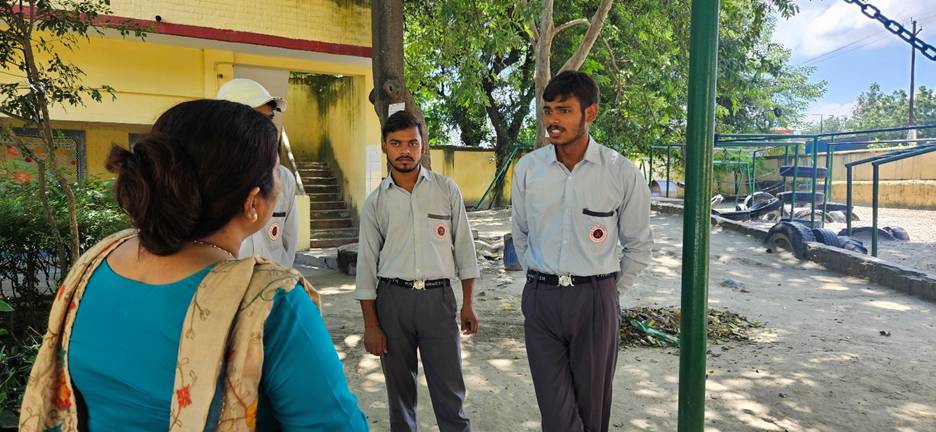
The students went on to build a small lotus pond using eco-bricks. They connected it to a village tradition in which wells are ceremonially “married” to one another – an act of reverence for water as a source of life. Vandana admits, “मुझे भी नहीं पता था कि कुएँ की कुएँ से शादी होती है!”
Moments like these reaffirm her belief in learning by doing. “हम लोगों को चीज़ें रटा दी जाती थीं,” she reflects. “लेकिन जब बच्चे खुद कुछ करते हैं, और आप उन्हें जीवन जीने का मौका देते हैं, तो वे खुद भी सक्षम होते हैं – और आपको भी बना देते हैं।”
Encouraging a student’s unique potential
From weaving waste-paper baskets as a child – skills she once thought were useless – Vandana has built a life’s work. She is often known as the “कबाड़ से जुगाड़” teacher. Initially, some remarks felt unsettling, “शुरू-शुरू में बुरा लगता था – लोग कहते थे, यह तो कबाड़ इकट्ठा करती है।” But with time, her work has brought recognition and a sense of coming full circle.
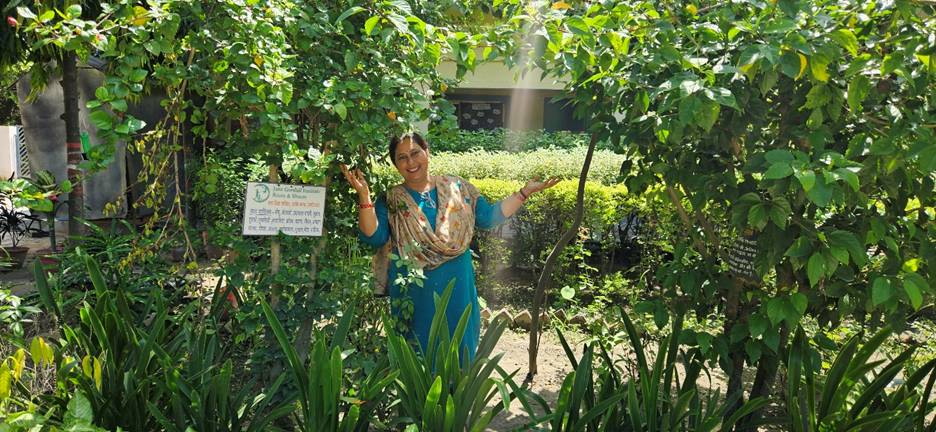
Vandana has received the Shaking the Tree Award and the Vidya Vibhushan Samman. She has led kabaad se jugaad workshops across schools in and beyond Lucknow, training teachers to create low-cost learning materials. One of her proudest moments came with international recognition from Jane Goodall herself in Mumbai.
Now, Vandana believes not every child needs to chase medicine, engineering, or the civil services. “अगर हम अपनी दुनिया ढूँढ़ते हैं,” she says, identity follows.
One former student, Om Singh, embodies this belief. In Class 12, he noticed fish dying in Surya Kund, Ayodhya during laser light shows. Using his uncle’s connections, he met the local magistrate and presented his findings. The show timings were changed.
Om later had to turn down a scholarship in environmental science in Taiwan because of family constraints. But his intervention captured exactly what Vandana hopes to nurture: young people who observe, question, and act.
Cultivating earth love
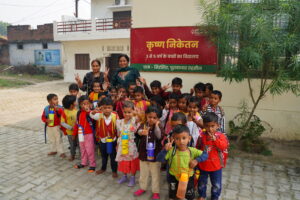
The philosophy at Yash Vidya Mandir, as Vandana describes it, is distinctive. “यहाँ पर एक संवेदना है… किसी का किसी से मुकाबला नहीं है,” she explains. For rural children moving from Pakka Foundation’s Krishna Niketans (pre-primary centers) to Yash Vidya Mandir, the continuity of environmental consciousness offers something precious: the understanding that the earth is not just something to study, but something to protect, honor, and learn from.