India generates 26,000 tonnes of plastic waste daily, and the availability of affordable alternatives remains a challenge.
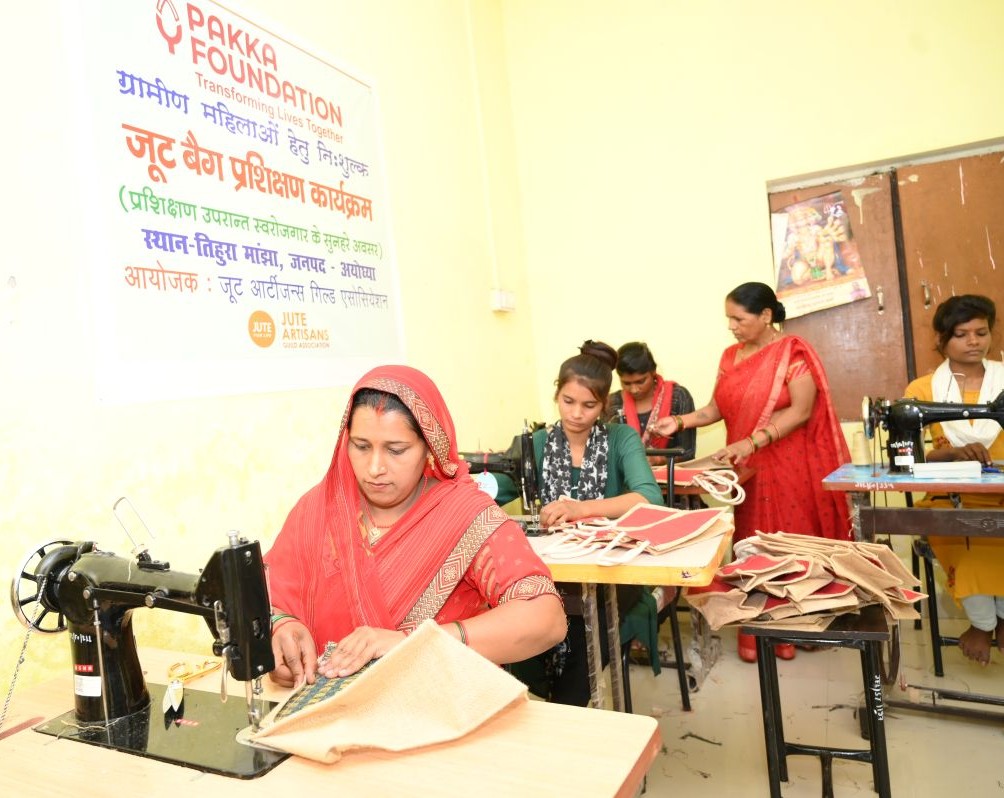
Our environment initiative provides the necessary support for enterprising, rural women to lead microenterprises of eco-friendly products that generate consistent income, employ more women, and form a part of the local circular economy.
Few women in Ayodhya do paid work, mostly as teachers or in government-related services. Despite limited opportunities close to home, many have an enterprising spirit - picking up skills like sewing or leaf plate-making and hoping to turn them into reliable income.
But building a livelihood requires more than a skill. It needs market connections, initial investment, and guidance to grow a business. Through Sarthi, we provide this support by enabling market linkages and providing initial raw materials and investment to help women start eco-friendly microenterprises that can grow to employ more craftspeople.
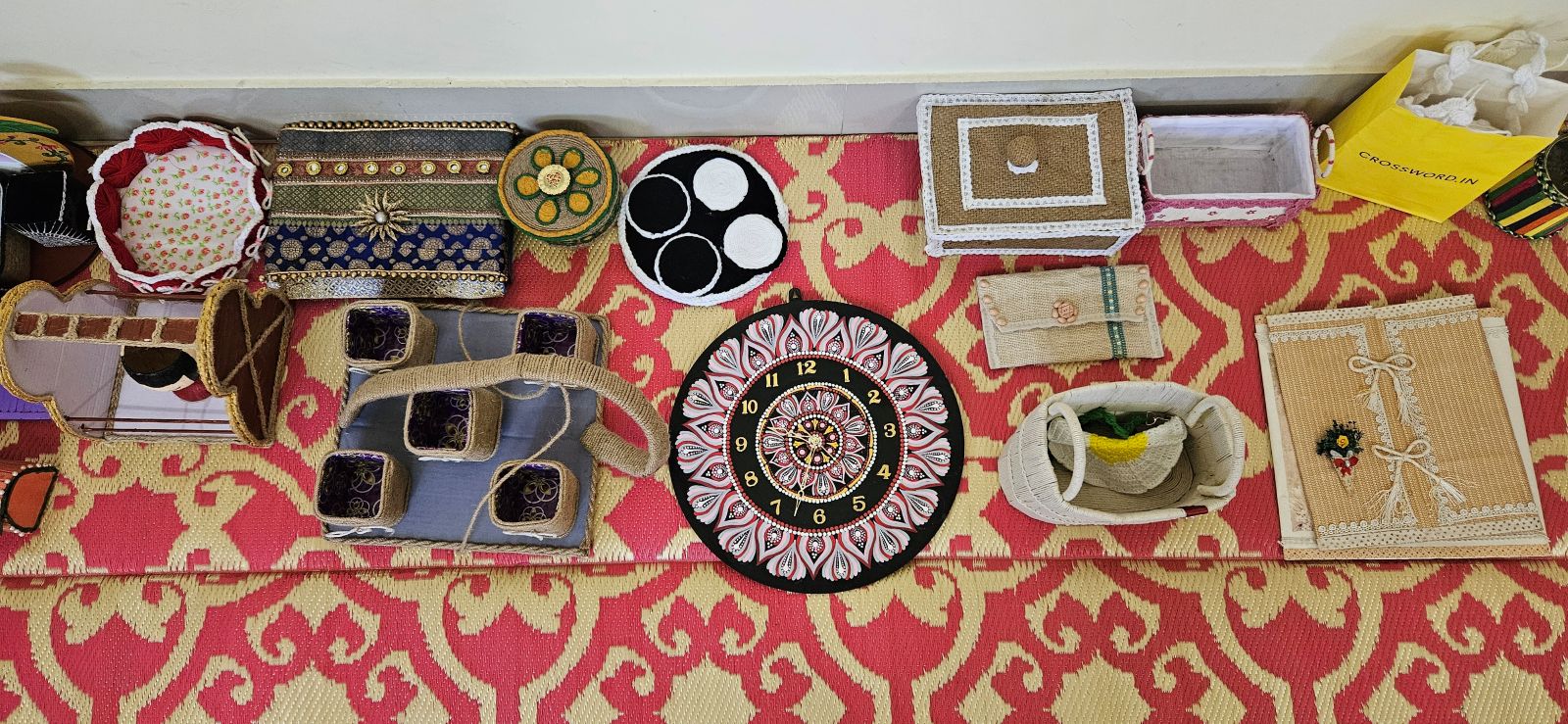
As Ayodhya grows as a tourist destination, these enterprises also offer sustainable alternatives to single-use plastics through locally made products such as millet or rice husk tableware, leaf plates, jute bags, handmade paper packaging, and terracotta items - celebrating what is local, sustainable, and handmade.
What people say
Testimonials
A sustainable microenterprise creates independence and dignity for rural women while bringing inclusive change in their community.
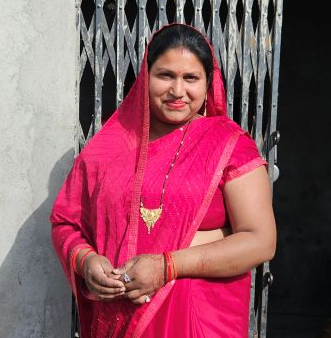
"I always wanted to stand on my own feet. When I was asked if I could run the center, I immediately said yes. Today, I earn enough to support my home, employ other women, and grow on my own terms. If we are right, no one can stop us."
SadhanaJute bag microenterprise owner
You can help by
Contributing ₹1,00,000 to help an enterprising rural woman launch a green microenterprise.
Your support ensures that a market of local, affordable, and eco-friendly alternatives is built and sustained, creating a model for inclusive growth.